This is the web site of Christopher League. I am a computer science professor at Long Island University in downtown Brooklyn, New York. This site contains information about my teaching, research interests, and hobbies, which include music, travel, food, reading, programming, design, and photography.
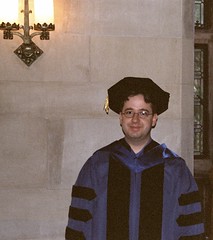
I have three degrees, all in computer science: a Ph.D. (2002) from Yale University, an M.S. (1997) from University of Maryland College Park, and a B.S. (1995) from Johns Hopkins. For more detailed credentials, see my CV [pdf]. A rambling and subjective biography follows.
I was born in Baltimore, Maryland in the early 1970s. My family moved to rural southern Pennsylvania just before I started school. Our home was barely a few meters north of the Mason-Dixon line, so I still consider myself to be from Maryland.
When I was about nine years old, my father brought home a Texas Instruments 99/4A home computer, and this probably changed my life forever. At first, we did not have the expansion unit (with floppy drive) nor hardly any game cartridges, nor even the cables to connect a cassette recorder. So I started to learn BASIC programming, writing out my programs into a notebook in longhand so that I could save my work.

Programming was a great thrill: like building things with Lego, except the programs actually did something (or failed to, which meant hours of stimulating bug-chasing). Around the same time, a few of my friends had acquired the Commodore 64 or Apple IIe, and my school had a few TRS-80 Model IV machines. So before long, I knew a few different dialects of BASIC, and was roughly familiar with the capabilities of each machine.
Before finishing high school, I had mastered Pascal and Logo, and I went to Hopkins to study computer science, figuring I would take up computer programming as a career. But when, in my second semester, I encountered the classic purple book – Structure and Interpretation of Computer Programs – I discovered that there was much more to computing and programming languages than I had previously imagined. The idea of graduate study and academic computer science suddenly became attractive.
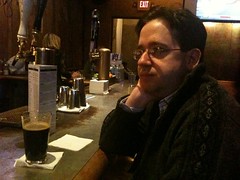
I spent the rise and fall of the dot-com bubble in grad school. This meant that, if I were to have a fight with my thesis adviser on a Monday, I could have a job at a web startup by Wednesday and become filthy rich in the IPO on Friday. Fortunately (?), my adviser was extremely reasonable.
I didn’t receive very many acceptance letters the first time I applied to grad school. University of Maryland was not high on my list, because they had very few faculty members with similar interests to mine. (This has changed since then.) But I had a great chat with John Gannon (now, sadly, deceased) about my options, and he convinced me to give Maryland a try. I did, and I learned a hell of a lot. Maryland filled many holes in my undergraduate CS education, and I learned to appreciate how challenging and rewarding teaching could be.
Still, I decided to try to apply again elsewhere. This time, I prepared studiously for the GRE, thought harder about my research interests, contacted professors whose work interested me, etc. This yielded several more acceptance letters. When I visited Yale, two factors influenced me. First, Zhong Shao spent a lot of time talking with me about his project, and his excitement was absolutely contagious. Second, that evening I spent many hours with a group of grad students at Bar, where the pizza and house-made beer were among the best I had ever tasted. No comment on which of these factors was ultimately more influential in my decision to attend Yale. I never once regretted the decision. Apart from the research opportunities, I met so many extraordinary people, and loved life in New Haven.

As I was wrapping up my terminal degree, my partner was already committed to New York City, so my job search was localized. I enjoy teaching at LIU. Certainly I feel more necessary than at a place like Yale, where undergraduate students will mostly succeed with or without good teaching. We see a few truly excellent students, and many that are sufficiently serious and motivated that it's worth my time to help them develop. It's a pleasure to watch them bloom.
Computer science may be the dominant theme in my life, but not the only one. Lest someone thinks that I am less than well-rounded, this section is devoted to my other interests.
I began taking piano lessons at about age 5. I was okay, but nothing really special; I loathed practicing every day. In high school I found a new teacher, who had retired from teaching at the Peabody Conservatory. At this point, I took the piano more seriously, and started listening to – and enjoying – classical music. It was probably too late for me to become a concert pianist, but it at least was a hobby I wanted to keep. I continued taking lessons in college, at Peabody. This was a fantastic opportunity that I probably didn’t take seriously enough, but my playing matured some, and I did get a lot out of it – particularly considering what little I put in. At home I have a Yahama digital piano, and I still sometimes fantasize about building a digital music studio around it.

I cannot draw or paint, but I always seemed to have an eye for design. I was the layout editor and a photographer for my high school newspaper. When I finished college, I received a nice 35mm SLR camera that I used extensively during travel. I started publishing my photos on the web in 1998, and I have received lots of great feedback. In grad school, I became more interested in page design and typography. I bought several books and really learned the innards of TeX. It’s delightfully old-school, but still (sadly?) the premier digital typesetting software. When I was learning all this, I wouldn’t have claimed it was anything other than a time sink. But now I’m glad to have learned it; I think my papers, slides, posters, syllabi, and web site are all better because of it. I clearly went overboard, but I think everyone can benefit by knowing a little about design. I recommend The Non-Designer’s Design Book by Robin Williams. (Not that one.)

At some level, I think I always knew I was gay. But at another level, I was inexplicably clueless about what that meant until maybe the third year of college, and I didn’t really come out until grad school. It’s hard to fathom now what was going on in my head. Today, many kids understand themselves well enough to come out by age twelve. I think I was a late bloomer partly because of where and when I came of age. James Carville famously quipped that “Pennsylvania is Philadelphia and Pittsburgh with Alabama in between.” Don't I know it.
I met Art in December 1998, at a party at Yale. We both seemed to know we wanted to be together right away, so the neurotic courtship phase was thankfully short. We now live happily together in Floral Park, at the edge of Queens on Long Island.


